
There is something satisfying about finding a good café in a museum or gallery. Not simply somewhere convenient to grab a coffee but somewhere that feels connected to the place you have come to visit and becomes part of the experience.
For cultural venues, getting that right is not always straightforward. Cafés need to cope with busy exhibition periods, offer the right choice at different moments in the day and make an important commercial contribution. They are also places where visitors pause, reflect on what they have seen, meet other people or simply extend their time at a venue.
That balance was central to the recent refurbishment of the RA Café at the Royal Academy of Arts, delivered by the Royal Academy of Arts, Sodexo Live! and 442 Design. Practical ambitions around customer flow, service efficiency and commercial performance were considered alongside the visitor experience with each decision contributing to a café that works better while feeling more connected to its setting.
Embracing what’s already there
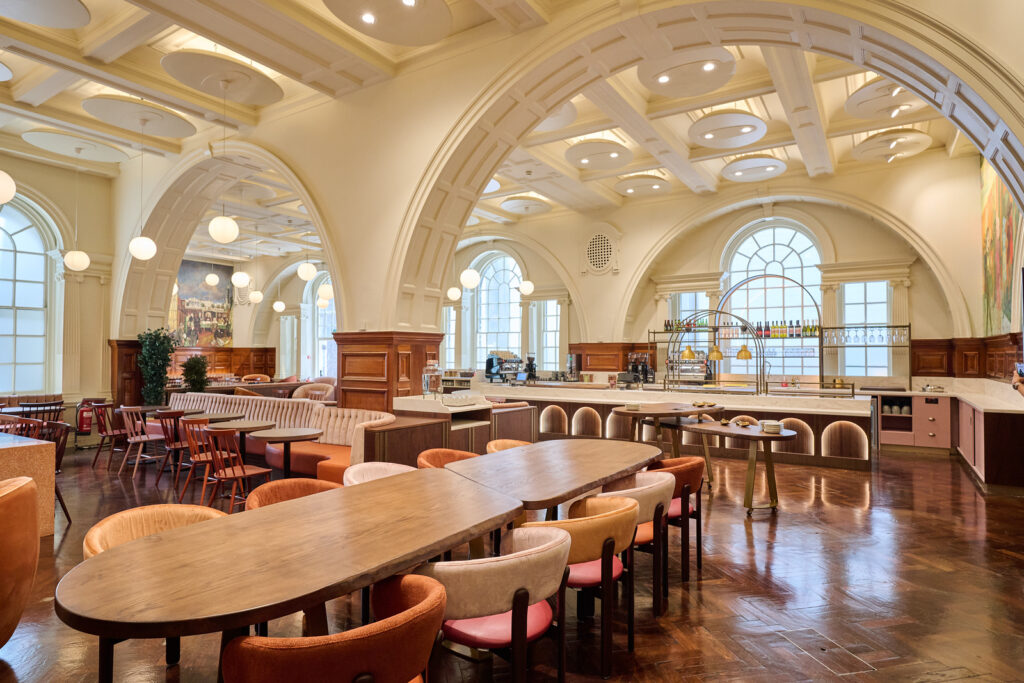
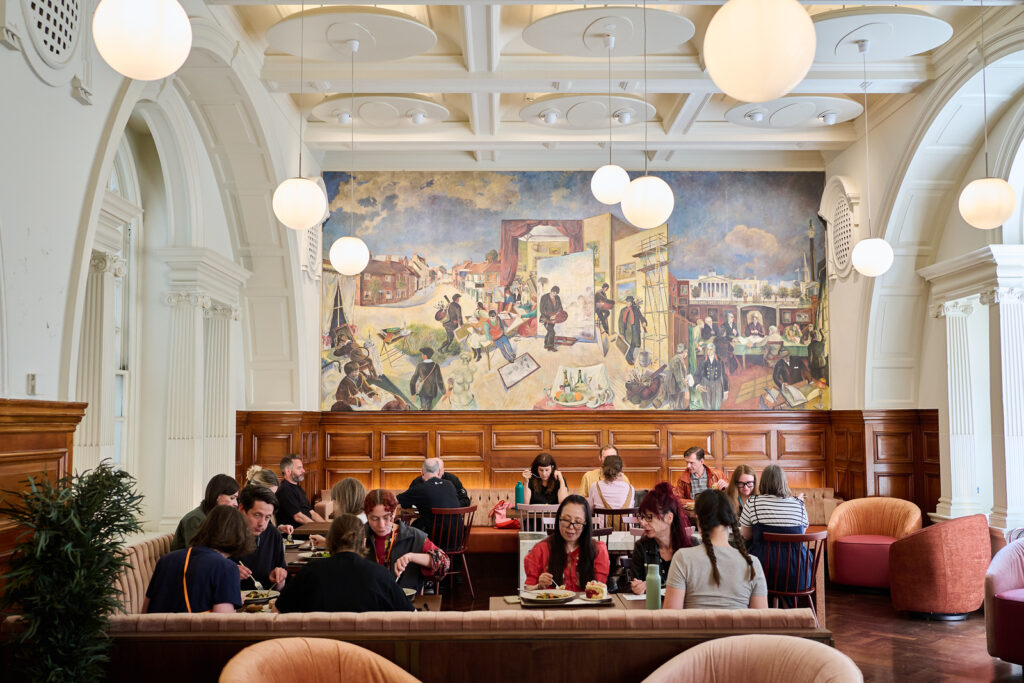
One of the most conscious decisions was to retain and celebrate the historic murals that have been part of the RA Café for generations. Rather than introduce a design concept that competed with them, the refurbishment has allowed the murals to become a focal point again, connecting visitors with the artistic history of the Royal Academy of Arts as they eat, drink or take a break from the galleries.
Originally known as the ‘Refreshment Room’, the RA Café was designed by Richard Norman Shaw and built in the 1880s soon after the Royal Academy of Arts moved to Burlington House. The RA began commissioning murals for the space soon afterwards.
Harold Speed’s Autumn was commissioned in 1896, followed by Fred Appleyard’s Spring driving out Winter. Both works narrowly escaped being painted over in the 1930s when they were considered out of step with contemporary ideas of mural decoration. Later commissions include Gilbert Spencer RA’s An Artist’s Progress and Leonard Rosoman RA’s Upstairs and Downstairs, the latter capturing both the public face of the Summer Exhibition and the less visible world of the RA Schools.
Working with this history rather than designing around it gives the café something that would be difficult to replicate elsewhere. Cultural venues often have a story already present in their collections, architecture or surroundings. A strong sense of place does not always need to be created from scratch.
Thinking about the whole visitor experience
A visitor grabbing a coffee before an exhibition has different expectations from someone stopping for lunch or sitting down afterwards to talk about what they have just seen. Those different occasions informed both the physical refurbishment and the food and drink offer.
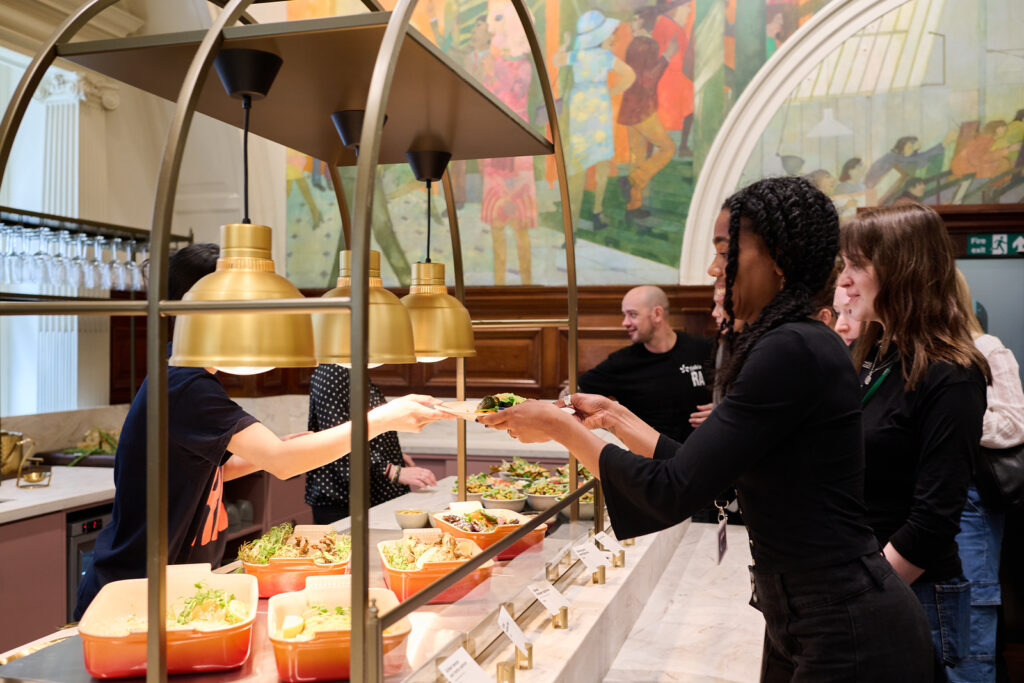
Our team looked closely at the journey through the café, improving sightlines, reducing bottlenecks and reconsidering product displays so visitors can see and navigate the offer more easily. Changes behind the counter have also made replenishment and service more efficient during exhibition peaks.
The product mix was approached with the same consideration. Rather than simply adding more choice, the focus was on making the offer relevant at different points in the day, from morning and lunchtime trading to seasonal products and opportunities to connect promotions with the exhibition calendar.
Supplier choices reflect that considered approach too. The café serves a blend of organic coffee crafted exclusively for the Royal Academy by Kiss the Hippo Coffee, whose roastery is certified to Soil Association organic standards. Tea comes from London-based social enterprise NEMI Teas, which offers organic whole-leaf teas in plastic-free, industrially compostable pyramid teabags, with more than half of its profits supporting hospitality training, work experience and employment opportunities for refugees.
Visitors don’t necessarily want a sustainability lecture with their cup of tea but increasingly they expect organisations to make responsible choices on their behalf. Thoughtful sourcing is one way those values can become part of the everyday visitor experience without overwhelming it.
When the experience works commercially too
The early results suggest visitors are responding well. In the comparable summer period following the refurbishment, total revenue increased by around 12%, average weekly revenue by approximately 13.5%, customer numbers by around 7.7% and average spend by just over 4%.
The combination matters more than any individual percentage. More visitors are choosing to use the café and spending a little more when they do while the operational changes are helping the team respond more effectively during exhibition peaks.
For cultural venues looking to make their commercial spaces work harder, there is something useful in that. Improving return does not necessarily mean squeezing more tables into a room, increasing prices or dramatically expanding the range. At the RA, the approach was more considered: look at how visitors use the café, remove points of friction, make the offer easier to navigate and give people a space in which they genuinely want to spend time.
Dwell time has a value beyond the immediate transaction too. Someone who stays for lunch, stops for tea after an exhibition or meets a friend in the café is spending more time with the venue. Hospitality gives a different rhythm to a cultural visit, providing a place to pause and process the experience rather than simply moving from one thing to the next.
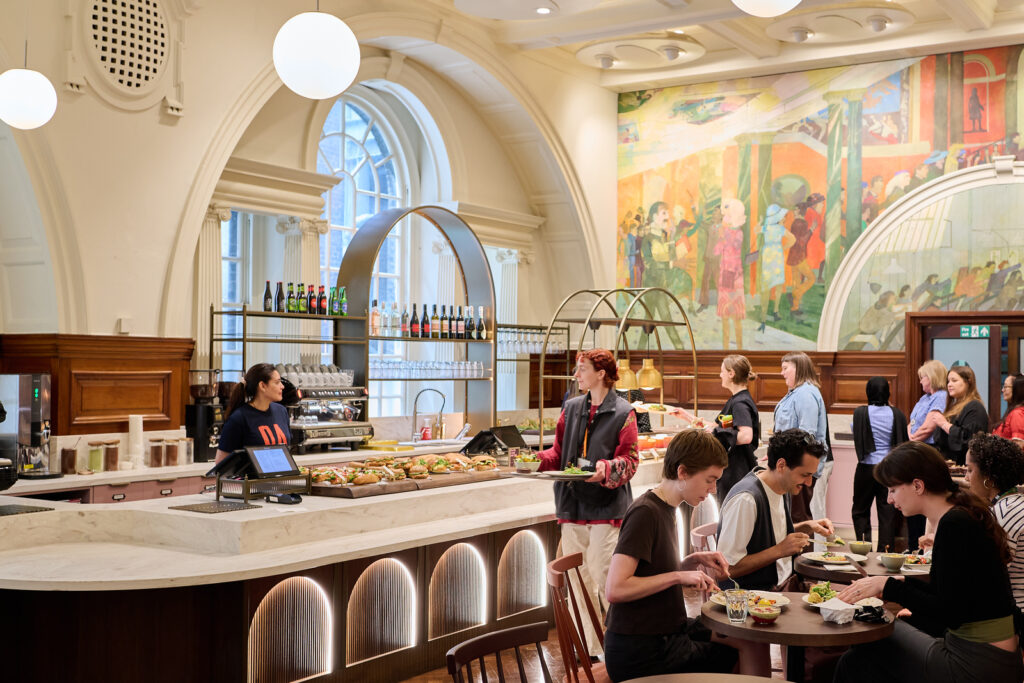
The project brought together the RA’s understanding of its building, audiences and creative identity with the operational and commercial expertise of Sodexo Live! and 442 Design’s specialist design approach. The result is a café that works harder without feeling separate from the reason people came through the door in the first place.
At the RA Café, one of the most memorable elements of that experience isn’t new at all, it is the murals that have been on the walls for more than a century.
If our story has prompted you to think differently about the role food, drink and visitor experience could play at your venue, please feel free to get in touch with me at sophie.mccready@sodexo.com to explore how our team at Sodexo Live! could help bring them to life.

very informative articles or reviews at this time.
오피박사는 주기적인 모니터링을 통해 신뢰도 높은 오피순위 차트를 제공하여 사용자의 선택 고민을 덜어드립니다.
조용하고 프라이빗한 주거 공간에서 방해받지 않고 온전한 휴식을 취하고 싶다면, 믿을 수 있는 성남출장마사지 예약 안내를 참고해 보시기 바랍니다.
출장안마
밤밤출장마사지에서는 서울지역 강남 사무실을 운영중으로, 30분내 방문이 가능한 곳입니다.
When testing an AI calling bot, include interruptions, unexpected questions, and requests to speak with a person. Try CallFluid’s demo as part of your evaluation: https://callfluid.io/ai-demo/