
Imagine a visitor arriving at a museum or heritage attraction. They find the entrance, buy a ticket, talk to a member of staff, explore the site, stop for lunch, perhaps visit the shop, and head home. If it’s been a particularly good day, they may tell a friend, return with family or decide to become a member.
At no point do they wonder which department was responsible for each part of that experience.
Yet inside our organisations, those decisions are often made separately. Programming develops the offer. Operations works out how to deliver it. Marketing promotes it. Commercial teams are asked what income it might generate. Visitor experience colleagues are left to make it all work, sometimes without having been part of the conversation.
The visitor experiences one organisation. Perhaps it’s time we planned and led like one.
More than a friendly welcome
Visitor experience is sometimes understood as what happens at the front door: the greeting, the queue, the helpful member of staff. All important, of course, but surely it’s much bigger than that.
It’s the promise we make before somebody arrives and whether we deliver it. It’s how easy the visit feels, whether our stories resonate, what happens when things go wrong, and whether people leave feeling that their time and money were well spent.
That makes visitor experience a strategic issue, not simply an operational one. And it makes the relationship between visitor experience and commercial enterprise fundamental.
Here at the Association for Cultural Enterprises we spend a great deal of time exploring how organisations can generate sustainable income without losing sight of their cultural purpose. One of the lessons is that the best commercial opportunities are rarely just about selling something extra. They’re about understanding what people value and making the experience more distinctive, coherent and memorable.
What the figures can and cannot tell us
Our Commercial Performance Barometer draws on data from cultural venues across the UK. Our recent report, A Seat at the Table, brings together insight from more than 260 sites. Its findings challenge the comfortable assumption that getting more people through the door will automatically deliver better commercial results.
During 2025, admissions across the Barometer were broadly flat, down 0.3%, while catering spend per visitor rose by 4% and retail spend by just 1%. Those are averages, of course, and the experience of individual venues varied considerably. But the message is useful: visitor numbers, visitor spending and organisational resilience do not necessarily move together.
Nor does a higher average transaction tell us whether visitors felt better served, whether a café made a worthwhile contribution after costs, or whether an event brought in people who will return.
We need to join the numbers to the human experience. What are visitors telling frontline colleagues? Where do they hesitate, get frustrated or become excited? Which experiences prompt a return visit? What are we learning from complaints, compliments and conversations as well as dashboards?
The data becomes valuable when it helps us ask better questions.
When the shop becomes part of the story
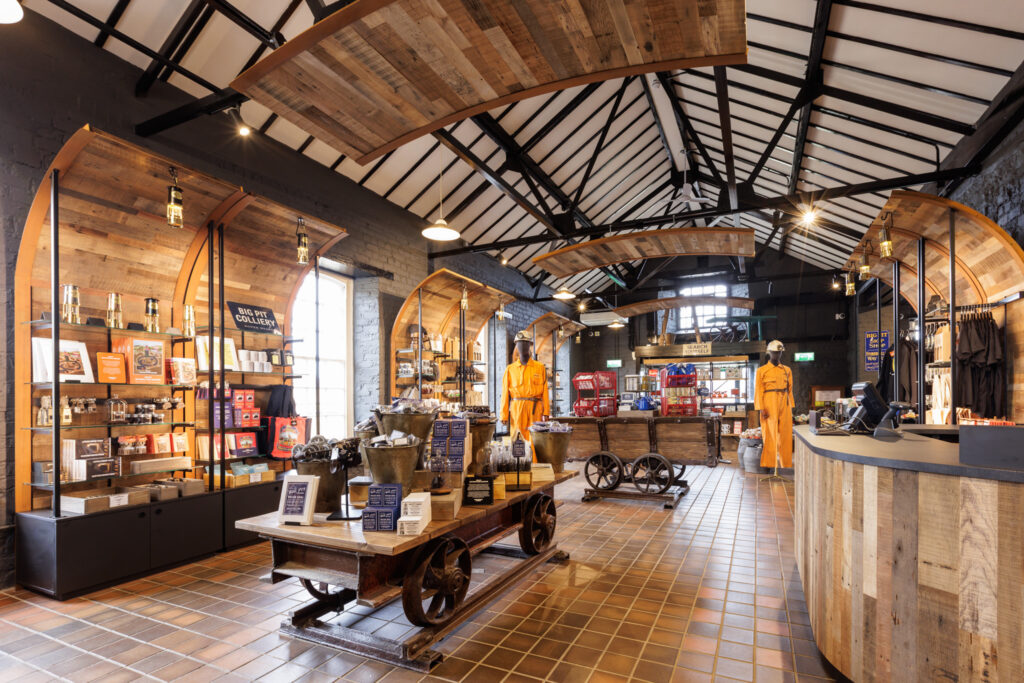
Consider Big Pit National Coal Museum in Wales. Its underground experience is powerful, personal and rooted in the lives of mining communities. Rather than treating the shop as a separate retail space, colleagues reimagined it as a continuation of that story.
Restored coal drams became display furniture. A soundscape and objects from the site’s history helped carry the atmosphere into the shop. Products drew on the collections and local suppliers. The result wasn’t simply better merchandising; it was a more authentic end to the visit.
Big Pit reported a 39% increase in spend per head following the redevelopment.
Of course the commercial result matters. But what interests me most is why it worked. The visitor wasn’t suddenly transported from a heritage experience into a generic shop. The experience continued, and the opportunity to spend made sense within it.
That is enterprise strengthening interpretation, rather than sitting awkwardly alongside it.
Who speaks for the visitor?
We’ve spent a lot of time in the sector talking about giving commercial expertise a seat at the leadership table. I strongly believe it belongs there. But I wonder whether we also need to ask a further question:
Who is speaking for the visitor?
Frontline teams hear the questions no survey quite captures. They know which signs people ignore, where queues form, what families struggle with, why visitors leave early and which moments make people smile.
That insight is valuable intelligence. Yet too often it reaches decision-makers as an occasional anecdote, or after a major decision has already been taken.
Imagine bringing those colleagues into the conversation before launching a new event, redesigning an admission offer or investing in a café. Alongside commercial forecasts and creative ambitions, we might ask: Will visitors understand it? Can we deliver it well? Is it accessible? What will it feel like on a busy Saturday? Does it fit our place and purpose?
Those questions aren’t obstacles to commercial ambition. They’re how we make it more likely to succeed.
And I think there’s something else here. If we want our colleagues to embrace commercial enterprise, we need to help them understand why it matters. Not because everybody suddenly needs to become a salesperson, but because the income we generate enables us to care for our places, invest in our people, improve experiences and deliver more of our purpose.
Equally, commercial colleagues need to understand the experience they’re helping to create. This works in both directions.
Better decisions, not more activity
None of this requires a complicated restructuring exercise. It starts with changing a few habits.
Bring programming, visitor experience, operations and commercial colleagues together while ideas are still being shaped, not once the budget and design are fixed.
Look at the entire visitor journey, including the awkward handovers between departments. Share not only income and attendance figures, but what visitors and staff are telling you.
And ask whether every new idea deserves to happen at all.
We talk enthusiastically about diversification, but another event, café or premium experience isn’t automatically the right answer. The right mix depends on mission, assets, audiences, place, capability and capacity.
Sometimes the most enterprising decision is to improve something we already offer, share expertise with a neighbouring attraction or stop doing something that doesn’t create enough value.
That’s what I mean by diversifying with purpose.
At the Association for Cultural Enterprises, we help cultural organisations make those choices through the Commercial Performance Barometer, our Cultural Enterprises Academy, regional networks, mentoring and the annual Conference and Trade Show. Our community connects people working in visitor experience, retail, catering, events, commercial strategy and leadership, because none of these disciplines can deliver their best in isolation.
And that’s why communities such as the Visitor Experience Forum matter too. Good ideas spread when people are willing to share what worked, what didn’t and what they would do differently. We can all benefit from stronger connections, more open conversations and a willingness to collaborate rather than duplicate.
The most successful visitor experience isn’t assembled from a series of excellent departments working independently. It’s created by people who understand the same visitor, share responsibility for the whole journey and have the confidence to make decisions together.
The visitor doesn’t see our organisation chart. Our thinking shouldn’t be limited by it either.
