
When cultural organisations review ticketing, the conversation often starts with replacing an old system, but the more useful question is perhaps this – what needs to improve operationally, commercially and for visitors if you are going to make a change at all?
Neela Ahmed, Director, Business Development UK at Ticketure, explains why the approach taken by National Museums Liverpool has worked so well, and what the cultural sector can learn from it.
National Museums Liverpool is a diverse group of seven museums and galleries welcoming around 2.1 million annual visitors. Following the pandemic, it was dealing with a major shift in visitor engagement and internal processes, including more ticketed events and a new online system for school bookings. The previous solution was no longer aligned with that growing complexity, and the goal was not simply to replace a system, but to modernise operations in a way that would support long-term growth and resilience.
What stands out to me is that this is not unusual. Many cultural organisations are now running a far more complex operation than they were just a few years ago. Timed entry, groups, memberships, Gift Aid, APIs, reporting and self-service are no longer side conversations. They are central to how a venue runs day to day.
The Five Lessons
1. Cloud-based control really matters when you are operating across multiple venues. NML needed a system that could manage complex operational requirements in real time, and that kind of agility becomes increasingly important as events, admissions and visitor patterns change. Teams need to be able to respond quickly without waiting on technical work every time something needs to be adjusted.
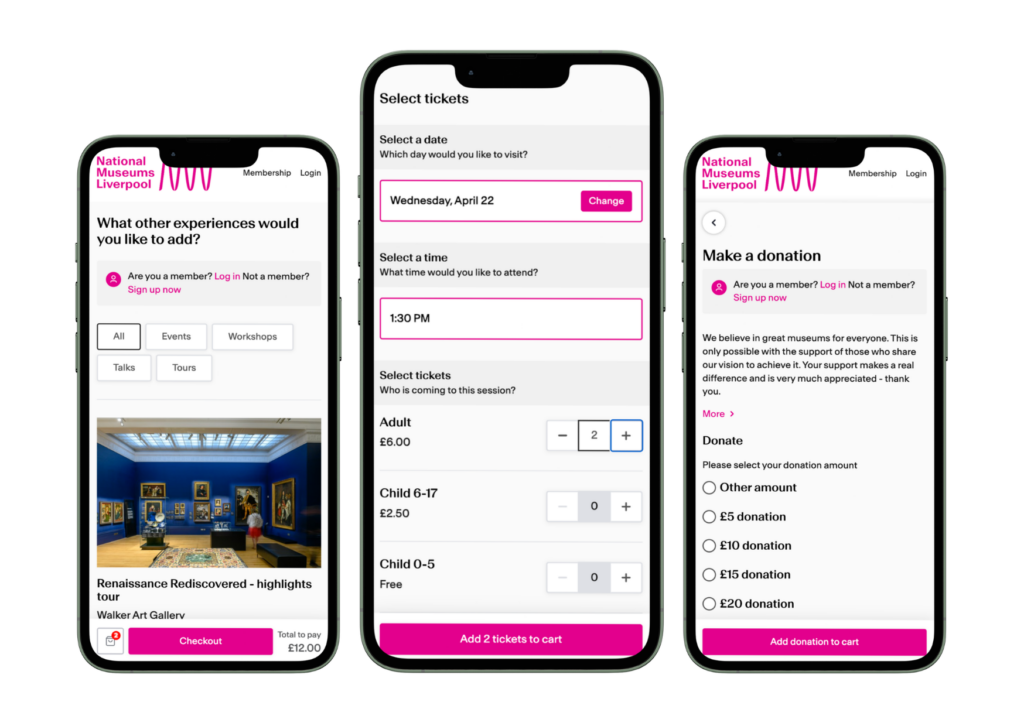
2. School and group bookings deserve proper workflow support. At NML, Ticketure was implemented across group and school bookings as well as timed entry, memberships, donations, API integrations and reporting. For many organisations, group visits are still one of the most manually intensive parts of the operation. When those workflows are better connected, you reduce pressure on staff and make the process easier for visitors at the same time.
3. Reporting is not just about dashboards. It is about helping teams make better decisions, faster. One of the reasons NML selected Ticketure was the need for dynamic, accessible reporting that could support informed decision-making. Since implementation, the Museum has been able to use stronger reporting and analytics to support programming, promotions and day-to-day operations with more confidence.
4. Memberships should sit within the wider visitor journey, not off to one side. The monthly performance data shared for this case study shows that NML Membership sales grew by nearly a quarter compared with the previous year.
That tells its own story. When memberships are easier to manage and better connected to the rest of the ticketing and visitor experience, they become more visible, more accessible and ultimately more commercially effective.
5. Modern ticketing should support growth, not simply administration. In 2025, National Museums Liverpool sold more than 170,000 tickets through Ticketure, a 20% increase on 2024. That is a meaningful improvement in volume, but what matters just as much is what sits behind it: better agility, a smoother visitor journey and stronger operational visibility. Growth becomes much easier to sustain when the system underneath it is helping teams move faster and make better decisions.
For me, the wider takeaway is simple: ticketing should not be viewed as a back-office necessity alone. It is a core part of how cultural organisations welcome visitors, support staff, generate income and understand performance. The technology matters, of course, but so does the ability to keep improving. That is one of the reasons I think this case study is useful. It shows what happens when a cultural organisation chooses a platform not just for what it can do today, but for how well it can support change over time.
Practical Takeaways for Cultural Organisations
- Look at ticketing as an operational and commercial project, not just a system replacement.
- Make sure groups, schools, memberships and reporting are considered together rather than separately.
- Prioritise cloud-based flexibility if you are managing multiple venues or changing event patterns.
- Focus on whether the system will help your teams make quicker, better-informed decisions.
- Look for evidence of impact on both visitor experience and income generation.
To read the full case study click here. Or to enquire further about whether Ticketure could support your organisation contact us by emailing Neela at neela.ahmed@ticketure.com.
Ticketure works with cultural organisations across the UK and North America to support admissions, memberships, donations, timed entry and reporting. More at www.ticketure.com
